31 December 2010

Standing on the Bible?

When the well-known twentieth-century conservative scholar A. Schlatter was considered for a professorial appointment to the university in Berlin, he was asked by a churchman on the committee whether, in his academic work, he 'stood on the Bible.'

Schlatter's reply: 'No, I stand under the Bible!'
--Andreas Kostenberger, Scott Kellum, and Charles Quarles, The Cradle, the Cross, and the Crown (B&H, 2009), 52

I should add that Schlatter did receive this appointment and one deciding factor was the university's desire to have someone on the faculty opposite Adolf von Harnack. While Schlatter wound up having a very positive relationship with him, Harnack was the poster-boy of the day for Ritschlian liberalism that read the Bible as inspiring spiritually but fictitious historically. That was the culture into which Schlatter was heading when he stood before that august committee and proclaimed his submission to the Bible.

(P.S. Can't help but quote Packer's blurb for this NT Intro: 'juicy pastoral reflections, and lashings of masterful common sense.' I think someone should compile all of Packer's blurbs into a book--this may be a multi-volume project--and then get some good blurbs for the Packer blurb collection.)

29 December 2010

Resolutions and Grace

Jonathan Edwards, diary, January 2, 1723:
Dull. I find by experience, that let me make resolutions, and do what I will, with never so many inventions, it is all nothing, and to no purpose at all, without the motions of the Spirit of God: for if the Spirit of God should be as much withdrawn from me always, as for the week past, notwithstanding all I do, I should not grow; but should languish, and miserably fade away. . . .

It is to no purpose to resolve, except we depend on the grace of God; for if it were not for his mere grace, one might be a very good man one day, and a very wicked one the next. . . . [Yet] all things shall work together for our good; not knowing in what way, indeed, but trusting in God.
The next weekend, grace broke through.
Saturday, January 12. In the morning I have this day solemnly renewed my baptismal covenant and self-dedication, which I renewed when I was received into communion of the church.

I have been before God; and have given myself, all that I am and have, to God, so that I am not in any respect my own: I can challenge no right in myself, I can challenge no right in this understanding, this will, these affections that are in me; neither have I any right to this body, or any of its members: no right to this tongue, these hands, nor feet; no right to these senses, these eyes, these ears, this smell or taste.

I have given myself clear away, and have not retained anything as my own. I have been to God this morning, and told him that I gave myself wholly to him. I have given every power to him; so that for the future I will challenge no right in myself, in any respect. I have expressly promised him, and do now promise almighty God, that by his grace I will not.

I have this morning told him, that I did take him for my whole portion and felicity, looking on nothing else as any part of my happiness, nor acting as if it were; and his law for the constant rule of my obedience; and would fight with all my might against the world, the flesh, and the devil, to the end of my life. And did believe in Jesus Christ, and receive him as a prince and a Savior; and would adhere to the faith and obedience of the gospel, how hazardous and difficult soever the profession and practice of it may be. . . .

This I have done.

And I pray God, for the sake of Christ, to look upon it as a self-dedication; and to receive me now as entirely his own, and deal with me in all respects as such; whether he afflicts me or prospers me, or whatever he pleases to do with me, who am his. Now, henceforth I am not to act in any respect as my own.
--Letters and Personal Writings, in Works of Jonathan Edwards, vol. 16, pp. 760, 762-63

'I have given myself clear away.'

Let's go there, by his grace, in 2011.

'No, the team is not going to be the most important thing to me'


I happened to go to church with a friend in Tampa several years ago, when Tony was with the Bucs, and saw the whole Dungy family get baptized upon professions of faith. Very moving. I've always admired the way Tony carries himself in an NFL culture of performance, pressure, and pride. In other words, of normal human people, like me.

Whose Feet Am I Washing?

I am rebuked; helped.
If we have the world's mentality of wanting the foremost place, we are not qualified for Christian leadership. This mentality can . . . fit us for being a big name among men, but it unfits us for real spiritual leadership.

To the extent that we want power we are in the flesh, and the Holy Spirit has no part in us. Christ put a towel around Himself and washed His disciples' feet. We should ask ourselves from time to time, 'Whose feet am I washing?' Some churches have made foot-washing into a third sacrament; members wash each other's feet during their worship service. While most of us think it is a mistake to make this a sacrament, let us admit that it is 10,000 times better to wash each other's feet in a literal way than never to wash anybody's feet in any way.
--Francis Schaeffer, No Little People (Crossway, 2003), 69

28 December 2010

Paperback Works of Edwards

Readers may be interested to know that the Yale University Press critical edition of Jonathan Edwards' works (the font of which is far superior to that of the un-critical 1834 Hickman edition) is putting these volumes into paperback. I got my copy of Religious Affections today and am pleased with it. At least volumes 1, 2 and 4 are now available in paperback.

I point this out because these paperback volumes will be available for the merciful price of around $20 each--10 to 20% of the cost of the hardback copies.

There is of course the fully searchable text of all 26 volumes available for free online. I still shake my head at this. And for searching purposes this online venue is wonderful. But for those, like me, who want to be able to hold, feel the weight of, mark up, and (yes) smell their books, you can now do so for the price of a tank of gas.

More info here.

Nate Larkin at Covenant Seminary

Nate Larkin recently gave a few talks at Covenant Seminary. Nate was a pastor with a porn addiction who has boldly laid bare his life for the sake of serving and helping others. He lives in Franklin, Tennessee and authored this book.

Would you like to hear the testimony of a man who spent twenty bucks on a hooker on his way to church to lead a candlelight service on Christmas Eve?

Honest, frightening, chastening, hope-giving.

Here's a bit more from Nate.

Much can come from little if the little is truly consecrated to God

Hope for each of us, and a call to fresh total surrender to God:
Consider the mighty ways in which God used a dead stick of wood. 'God so used a stick of wood' can be a banner cry for each of us. Though we are limited and weak in talent, physical energy, and psychological strength, we are not less than a stick of wood. But as the rod of Moses had to become the rod of God, so that which is me must become the me of God. Then I can become useful in God's hands. The Scripture emphasizes that much can come from little if the little is truly consecrated to God. There are no little people and no big people in the true spiritual sense, but only consecrated and unconsecrated people.
--Francis Schaeffer, No Little People (Crossway, 2003), 25

27 December 2010

Warfield on True Self-Sacrifice

'Let this mind be in you . . .' --Phil 2:5

Warfield on Phil 2:5-11:
We need to note carefully . . . that it is not self-depreciation, but self-abnegation, that is thus commended to us. If we would follow Christ, we must, every one of us, not in pride but in humility, yet not in lowness but in lowliness, not degrade ourselves but forget ourselves, and seek every man not his own things but those of others. . . .

We cannot be self-consciously self-forgetful, selfishly unselfish. Only, when we humbly walk this path, seeking truly in it not our own things but those of others, we shall find the promise true, that he who loses his life shall find it. Only, when, like Christ, and in loving obedience to His call and example, we take no account of ourselves, but freely give ourselves to others, we shall find, each in his measure, the saying true of himself also: 'Wherefore also God hath highly exalted him.'

The path of self-sacrifice is the path to glory.
--B. B. Warfield, 'Imitating the Incarnation,' pp. 6, 8

Isn't this, in essence, exactly what Paul was commending Timothy and Epaphroditus for in the latter half of Philippians 2?

God get us there.

26 December 2010

The Heavenly Wine Was Too Strong

Parkinson Milton, diary entry of October 26, 1874--
My soul was, at times, in a burning rapture, almost too ecstatic for this tabernacle. Again and again I repeated the words for which such as in the martyrs glowed, dying champions for their God. The truth is, I had to cease doing so, feeling that the heavenly wine was too strong for the earthly vessel. Oh, when mortality shall be swallowed up in life! I burn for Christ. This soul I offer, Christ, in flames to Thee, joy unspeakable and full of glory.
--quoted in Martyn Lloyd-Jones, Seeking the Face of God: Nine Reflections on the Psalms (Crossway, 2005), 129

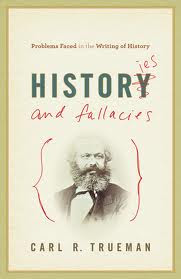
Histories and Fallacies

Recently enjoyed Carl Trueman's Histories and Fallacies: Problems Faces in the Writing of History. It's a well-written little book that explores how to do history, with reflections on: navigating between naive claims to historical neutrality on the right and cynical denial of any stable historical objectivity on the left (ch. 1); the frameworks we all bring to our study of history and how, though necessary and positive, such grids can give us historiographical blinders (ch. 2); various kinds of historigraphical anachronisms (ch. 3); and fallacies historians can commit (ch. 4).

History is not technically my field (New Testament is) but I am fascinated by and love studying history. Yet this is the first book I've read on how to study and write history. I am helped. I would like to become a more astute history student, and this book (esp. the first and last chapters) opened my eyes to mistakes I have been making in how I view history and draw connections between events. Actually, I think I've committed every historical fallacy listed in ch. 4.

Also, the book is rich in implications for biblical studies students. In some ways it feels like an abbreviated version of Is There a Meaning in This Text? filtered through a historical rather than a literary grid (esp. ch. 1). The final chapter's helpful list of historical fallacies is akin to the flavor and strategy of this book, though directed not to exegesis but historiography. Many of the insights and cautions of Carl's book carry over transparently into biblical studies--which is itself inherently historical. My work on the New Perspective, for instance, could hardly be less historically driven and in need of historiographical sophistication.

The writing is clear and though this is a book that becomes dense at points (the extended interaction with Christopher Hill's Marxism in ch. 2 could have made the point with half the words), a consistent string of interesting examples from history keep the pages turning. And Carl writes with a kind of robust sense of conviction which refuses to footnote every assertion in an effort to anticipate all possible objections--evidence of courage, and refreshing.

Here's one bit that made me smile. After writing, 'Radical postmodern relativists who reduce all history to tropes or aesthetics and who want to debunk the claims of any approach to the past as being "more true" than any other often do so on ethical grounds: the white heterosexual male history must be dethroned because it helps to perpetuate the oppression of the Other, whether the Other is women, blacks, gays, etc.', Carl footnotes:
Interestingly enough, the Other is rarely defined by such postmoderns in terms with which the middle-class intelligentsia would be uncomfortable: members of the Ku Klux Klan, Holocaust deniers, serial killers, and collectors of other people's toenail clippings would all seem to have first-class claims to having been marginalized and written out of the dominant narratives of this world; but none, so far as I know, enjoys the support of a significant postmodern lobby group. (53 n. 16)
On another note, Stacey and I were remarking today how merciful God has been to us. Goodness. Challenges, disappointments--of course. We're not in Isaiah 65 yet. But the lovingkindness of the Lord, in Christ and in a thousand ways flowing from that supreme blessing, is inexplicable to us. It has come home to us afresh this holiday season.