29 December 2006

20 December 2006
Motivation (24): Murray
 John Murray (1898-1975), Scotch-born professor of systematic theology at Westminster Theological Seminary (who surely wasn't as mean as he looks in this picture):
"'A new heart also will I give you, and a new spirit will I put within you' (Ezek. 36:26). God effects a change which is radical and all-pervasive, a change which cannot be explained in terms of any combination, permutation, or accumulation of human resources, a change which is nothing less than a new creation by him who calls the things that be not as though they were, who spake and it was done, who commanded and it stood fast. This, in a word, is regeneration."
"The regenerate person cannot live in sin and be unconverted. And neither can he live any longer in neutral abstraction. He is immediately a member of the kingdom of God, he is spirit, and his action and behaviour must be consonant with that new citizenship. I the language of the apostle Paul, “if any man be in Christ, he is a new creature; the old things have passed away, behold they have become new” (2 Cor. 5:17). There are numerous other considerations derived from the Scripture which confirm this great truth that regeneration is such a radical, pervasive, and efficacious transformation that it immediately registers itself in the conscious activity of the person concerned in the exercises of faith and repentance and new obedience. Far too frequently the conception entertained of conversion is so superficial and beggarly that it completely fails to take account of the momentous change of which conversion is the fruit. . . . Regeneration is at the basis of all change in heart and life. It is a stupendous change because it is God’s recreative act."
"The Holy Spirit is the controlling and directing agent in every regenerate person. Hence the fundamental principle, the governing disposition, the prevailing character of every regenerate person is holiness—he is “Spiritual” and he delights in the law of the Lord after the inward man (I Cor. 2:14, 15; Rom. 7:22). This must be the sense in which John speaks of the regenerate person as not doing sin and as unable to sin (I John 3:9, 5:18)."
--Redemption: Accomplished and Applied (Grand Rapids: Eerdmans, 1955), 96, 104-105, 142.
19 December 2006
Stallone: "Believing in Jesus"
 The more I go to church, and the more I turn myself over to the process of believing in Jesus and listening to His Word and having Him guide my hand, I feel as though the pressure is off me now. --Sylvester Stallone
Evidently Stallone had a conference call with a group of pastors to discuss the spiritual themes of the newest Rocky movie, which opens tomorrow, and Stuart Shepard of Focus on the Family believes he heard a sincere profession of faith. There's even been a website started, Rocky Resources, dedicated to helping church leaders "utilize the film as a teaching, preaching, or outreach opportunity."
18 December 2006
Motivation (23): Lewis
 C. S. Lewis (1898-1963), Oxford professor, author across literary genres, and Calvinist in cognito (even to himself), writes this on the fundamental change that must happen if we are to be truly morally motivated:
"But what man, in his natural condition, has not got, is Spiritual life—the higher and different sort of life that exists in God. We use the same word life for both: but if you thought that both must therefore be the same sort of thing, that would be like thinking that the 'greatness' of space and the 'greatness' of God were the same sort of greatness. In reality, the difference between Biological life and spiritual life is so important that I am going to give them two distinct names. The Biological sort which comes to us through Nature, and which (like everything else in Nature) is always tending to run down and decay so that it can only be kept up by incessant subsidies from Nature in the form of air, water, food, etc., is Bios. The Spiritual life which is in God from all eternity, and which made the whole natural universe, is Zoe. Bios has, to be sure, a certain shadowy or symbolic resemblance to Zoe: but only the sort of resemblance there is between a photo and a place, or a statue and a man. A man who changed from having Bios to having Zoe would have gone through as big a change as a statue which changed from being a carved stone to being a real man.
"And that is precisely what Christianity is about. This world is a great sculptor’s shop. We are the statues and there is a rumor going round the shop that some of us are some day going to come to life."
--Mere Christianity, 139-140
"I can to some extent control my acts: I have no direct control over my temperament. And if (as I said before) what we are matters even more than what we do—if indeed, what we do matters chiefly as evidence of what we are—then it follows that the change which I most need to undergo is a change that my own direct, voluntary efforts cannot bring about. And that applies to my good actions too. How many of them were done for the right motive? How many for fear of public opinion, or a desire to show off? How many from a sort of obstinacy or sense of superiority which, in different circumstances, might equally have led to some very bad act? But I cannot, by direct moral effort, give myself new motives. After the first few steps in the Christian life we realize that everything which really needs to be done in our souls can be done only by God."
--Ibid, 166
"There are three kinds of people in the world. The first class is of those who live simply for their own sake and pleasure, regarding Man and Nature as so much raw material to be cut up into whatever shape may serve them. In the second class are those who acknowledge some other claim upon them – the will of God, the categorical imperative, or the good of society – and honestly try to pursue their own interests no further than this claim will allow. They try to surrender to the higher claim as much as it demands, like men paying a tax, but hope, like other taxpayers, that what is left over will be enough for them to live on (this idea is also in Mere Xianity). Their life is divided, like a soldier’s or a schoolboy’s life, into time 'on parade' and 'off parade', 'in school' and 'out of school'. But the third class is of those who can say like St Paul that for them 'to live is Christ'. These people have got rid of the tiresome business of adjusting the rival claims of Self and God by the simple expedient of rejecting the claims of Self altogether. The old egoistic will has been turned round, reconditioned, and made into a new thing. The will of Christ no longer limits theirs; it is theirs. All their time, in belonging to Him, belongs also to them, for they are His.
"The price of Christ is something, in a way, much easier than moral effort – it is to want Him."
"Three Kinds of Men," in Present Concerns, 21-22
For sites devoted to Lewis see the C. S. Lewis Institute, Into the Wardrobe, and the C. S. Lewis Foundation.
God and the Marlboro Man
 Russell Moore at Southern Sem thinks God may be more like the Marlboro man than does (open theist) John Sanders in the latter's festschrift for Clark Pinnock.
15 December 2006
Water in John
 I had never noticed before today the pervasiveness of the theme of water (hydor) in the opening chapters of John. I'm wondering if water is the dominant metaphor for the first half of the pre-passion narrative (ch. 1-7), light the dominant motif of the second half of the pre-passion narrative (8-12), and love that of the passion narrative (13-21). John 1 messes up my theory, though, with no mention of H2O but lots of mention of light. Anyhow . . .
John 2 - Jesus turns water into wine
John 3 - Jesus tells Nicodemus he must be born "of water and the Spirit," and late in the chapter (v. 23) speaks of the "plentiful" water where John was baptizing
John 4 - an extended discussion between Jesus and a Samaritan woman about literal water vs. that which prevents any future thirst
John 5 - the rather sad character, lame for 38 yrs, lying at the pool complaining of having no one to help him into the water (v. 7) (also, the variant which includes v. 4 mentions the pool's hydor 3x)
John 6 - Jesus walks on water
John 7 - as in ch. 4, Jesus reiterates that those who believe in him will have springs of living water flow from the inside-out
Water shows up two other times in the narrative, in ch. 13 where Jesus pours water into a basin and washed the disciples' feet, and ch. 19 where blood and water come out of his side when pierced with a spear. Probably too much to work these in somehow, but I think it is definitely a controlling motif in the first 7 chapters. Remembering the value water held in that dry, pre-plumbing culture is of course integral too.
Bill Mounce: Biblical Training
I just discovered Bill Mounce's website, biblicaltraining.org. It has free resources such as class lectures (such as Thielman's NT theology course), seminar's (such as Bock's on Da Vinci code) and books online (right now, I. Howard Marshall's intro to NT theology). You have to register but it's free. I love it.
Dr. Mounce taught at Gordon-Conwell and then Azusa Pacific and is now a pastor in Washington. He did what in my opinion is the best introductory text to Biblical Greek available; why we don't use it a Covenant Seminary is a mystery.
Dr. Mounce taught at Gordon-Conwell and then Azusa Pacific and is now a pastor in Washington. He did what in my opinion is the best introductory text to Biblical Greek available; why we don't use it a Covenant Seminary is a mystery.
14 December 2006
JE Missing
If anyone knows what has happened to www.jonathanedwards.com, please let me know. One blogger thinks it has been merged into Yale's site (linked to the right).
Motivation (22): Berkhof
 Louis Berkhof (1873-1957), Dutch professor of theology at Calvin Seminary:
"Regeneration consists in the implanting of the principle of the new spiritual life in man, in a radical change of the governing disposition of the soul, which, under the influence of the Holy Spirit, gives birth to a life that moves in a Godward direction. In principle this change affects the whole man. . . .
"Regeneration is that act of God by which the principle of the new life is implanted in man, and the governing disposition of the soul is made holy . . . and the first holy exercise of this new disposition is secured."
--Louis Berkhof, Systematic Theology (Edinburgh: Banner of Truth, 1958), 468, 469.
13 December 2006
Motivation (21): Spurgeon
 If you think to yourself, "Hmm...this seems to be more about regeneration than motivation...", my response is: exactly. What I'm trying to show with these quotes from church history is that motivation does not come by rational arguments (outside-in) but by a new disposition implanted in the heart, what Edwards calls a new inner relish (inside-out). Regeneration is the foundation for motivation that is "from the heart" (Rom 6:17).
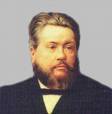
Charles Haddon Spurgeon (1834-1892), Baptist pastor of the Metropolitan Tabernacle in London:
"[R]egeneration consists in this, God the Holy Spirit, in a supernatural manner—mark, by the word supernatural I mean just what it strictly means; supernatural, more than natural—works upon the hearts of men, and they by the operations of the divine Spirit become regenerate men; but without the Spirit they never can be regenerated. And unless God the Holy Spirit, who ‘worketh in us to will and to do,’ should operate upon the will and the conscience, regeneration is an absolute impossibility, and therefore so is salvation. . . . in the salvation of every person there is an actual putting forth of divine power, whereby the dead sinner is quickened, the unwilling sinner is made willing, the desperately hard sinner has his conscience made tender; and he who rejected God and despised Christ, is brought to cast himself down at the feet of Jesus. . . . If you like it not, quarrel with my Master, not with me; I do but simply declare his own revelation that there must be in your heart something more than you can ever work there. There must be a divine operation, call it a miraculous operation if you please; it is in some sense so. There must be a divine interposition, a divine working, a divine influence, or else do what you may, without that you perish, and are undone—'For except a man be born again he cannot see the kingdom of God.' The change is radical; it gives us new natures, makes us love what we hated and hate what we loved; sets us in a new road; makes our habits different, our thoughts different, makes us different in provate, and different in public."
--The Metropolitan Tabernacle Pulpit: Sermons Preached and Revised by C. H. Spurgeon, 3:188.
"Regeneration is not the reforming of principles which were there before, but the implantation of a something which had no existence; it is the putting into a man of a new thing called the Spirit, the new man – the creation not of a soul, but of a principle higher still – as much higher than the soul, as the soul is higher than the body. . . . In the bringing of any man to believe in Christ, there is as true and proper a manifestation of creating power, as when God made the heavens and the earth."
--Ibid, 9:566.
"The absolute necessity of the new birth is also a certainty. We come down with demonstration when we touch that point. We shall never poison our people with the notion that a moral reformation will suffice, but we will over and over again say to them, 'Ye must be born again.'"
--Lectures to My Students, 222.
Iain Murray discusses Spurgeon on regeneration in The Forgotten Spurgeon (Edinburgh: Banner of Truth Trust, 1966), 95-97.
Subscribe to:
Posts (Atom)